
The Eames Lounge Chair
—History & Story—
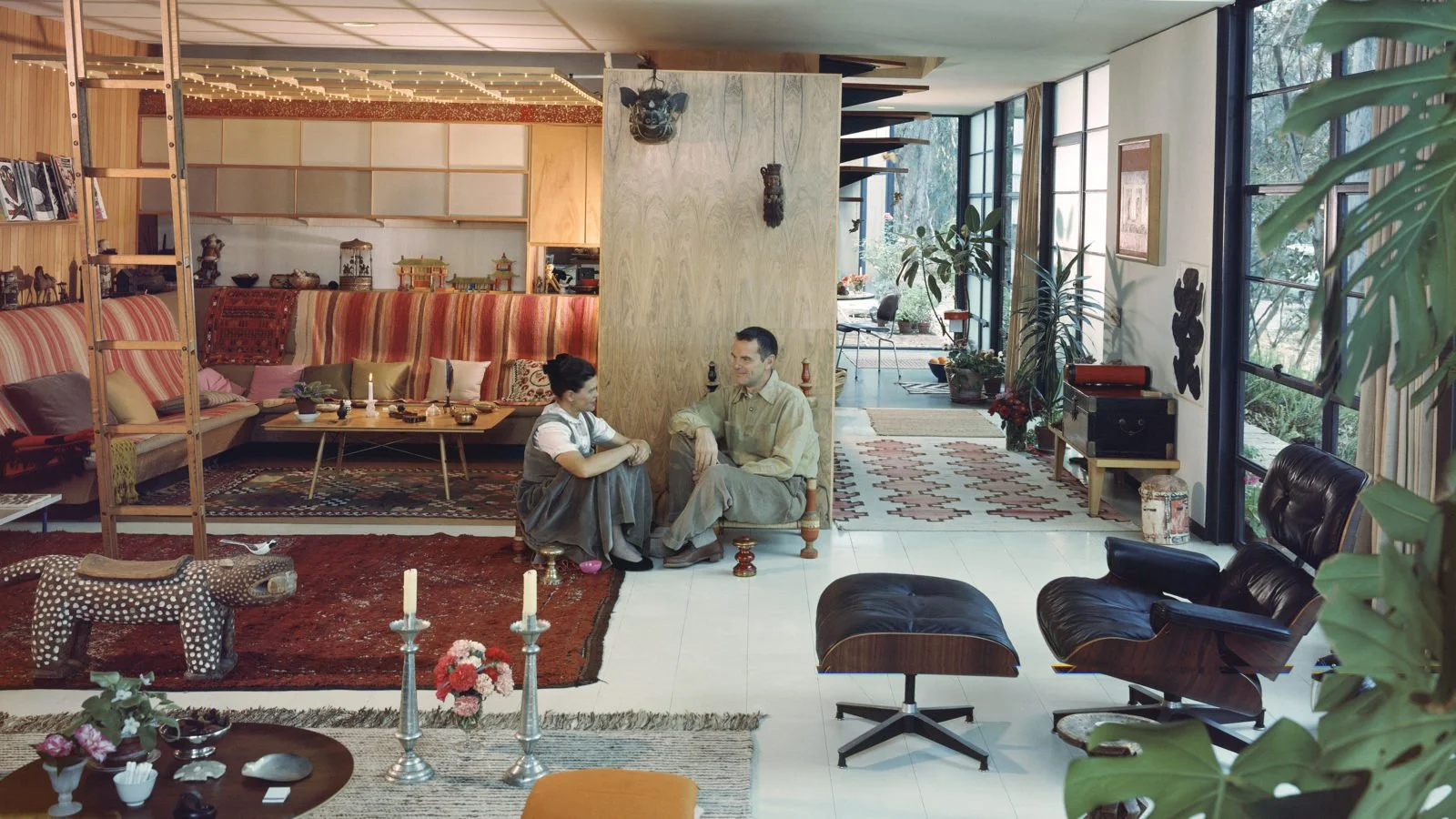
Ray and Charles in their living room in 1958.
Julius Shulman / J. Paul Getty Trust
Few chairs are as recognizable — or as worth preserving — as the Eames lounge. Introduced in 1956 as Herman Miller's Model 670, it's the chair we named our studio after, and the one we've spent years learning to restore. Here's the story of how it was built, why it endures, and how to tell an original from a reproduction.
Charles and Ray Eames
The Eames lounge chair was designed by Charles and Ray Eames, the husband-and-wife team who were among the most influential American designers of the twentieth century. Their work spanned furniture, architecture, film, and exhibition design, but they're best known for a body of furniture — much of it produced by Herman Miller — that combined new manufacturing technology with genuine comfort and warmth.
A through-line in their furniture was molded plywood: forming wood under heat and pressure into compound curves. The Eameses had spent years refining the technique (including on molded plywood leg splints produced during the Second World War), and that mastery is what made the lounge chair possible.
The 1956 Debut
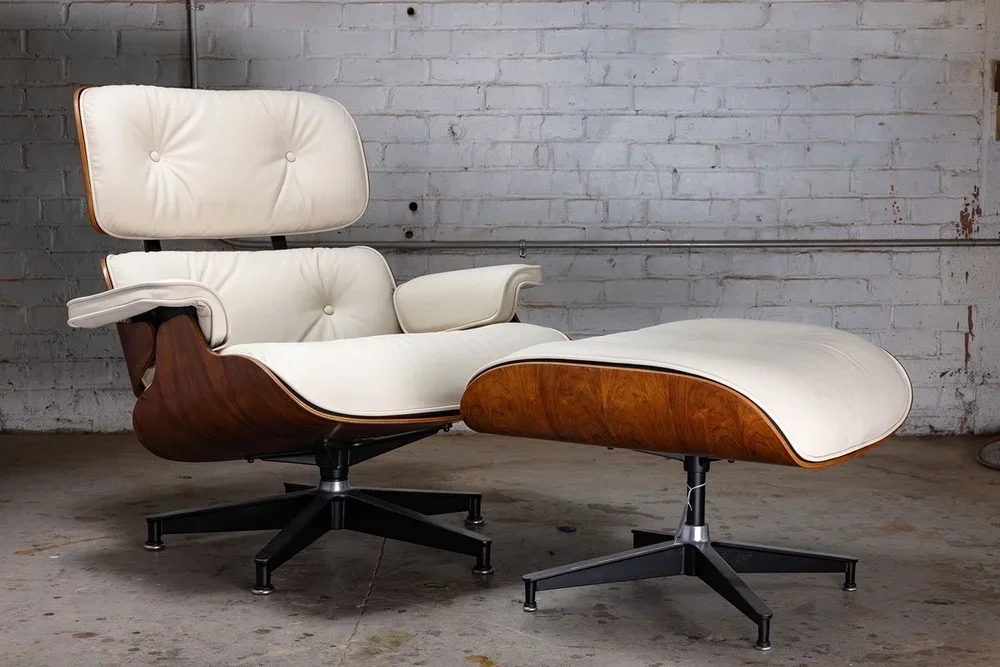
The Eames Lounge Chair and Ottoman — Herman Miller's Model 670 (chair) and 671 (ottoman) — were introduced in 1956. The story most often told is that the Eameses wanted a premium lounge chair with, in Charles Eames's words, the warm, receptive look of a "well-used first baseman's mitt."
It was a deliberate departure from their earlier, more affordable molded designs: a luxury object built from three curved plywood shells, leather cushions, and a die-cast aluminum base. It debuted on American television and was an immediate icon.
Why It Endures
Nearly seventy years later, the 670 is still in production and still desirable, which is rare for any piece of furniture:
The design hasn't become dated. The proportions and materials still feel current, even decades after their debut — the mark of a classic design, not just a passing trend.
It was built to last and to be repaired. The shell-and-mount construction means a chair can be brought back to life rather than discarded — the entire foundation of our business.
It holds value. Well-kept originals have held their value and often even increase in value, which is unusual for mass-produced furniture and a strong argument for restoring rather than replacing your chair.
Originals, Reissues, and Restoration
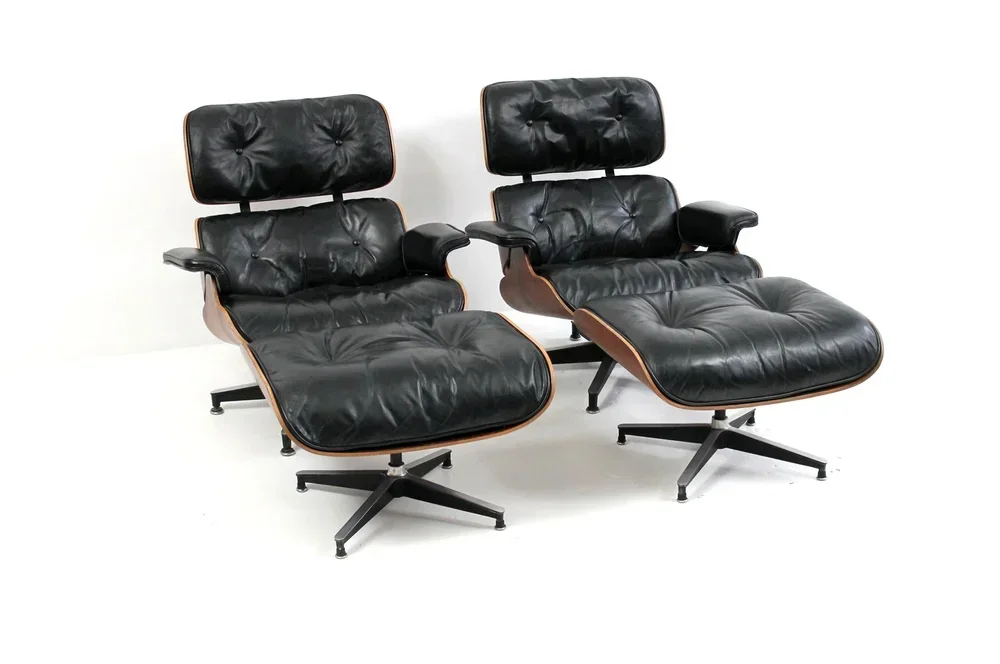
The chair has been produced continuously by Herman Miller (and, in Europe, by Vitra), so examples range from 1950s originals to current production, with decades of material and construction variation in between. Telling them apart — and restoring each correctly to its era — is a large part of our work.
If you have a chair and aren't sure what you have, we can help you identify it — and if it needs work, restore it correctly for its age.